



A company’s industry affiliation sets strict requirements for the architecture, materials, and workflows of its booth. A one-size-fits-all design leads to a loss of engagement with visitors and inefficient budget utilization. Let’s consider the key differences for four verticals.
IT and Innovation
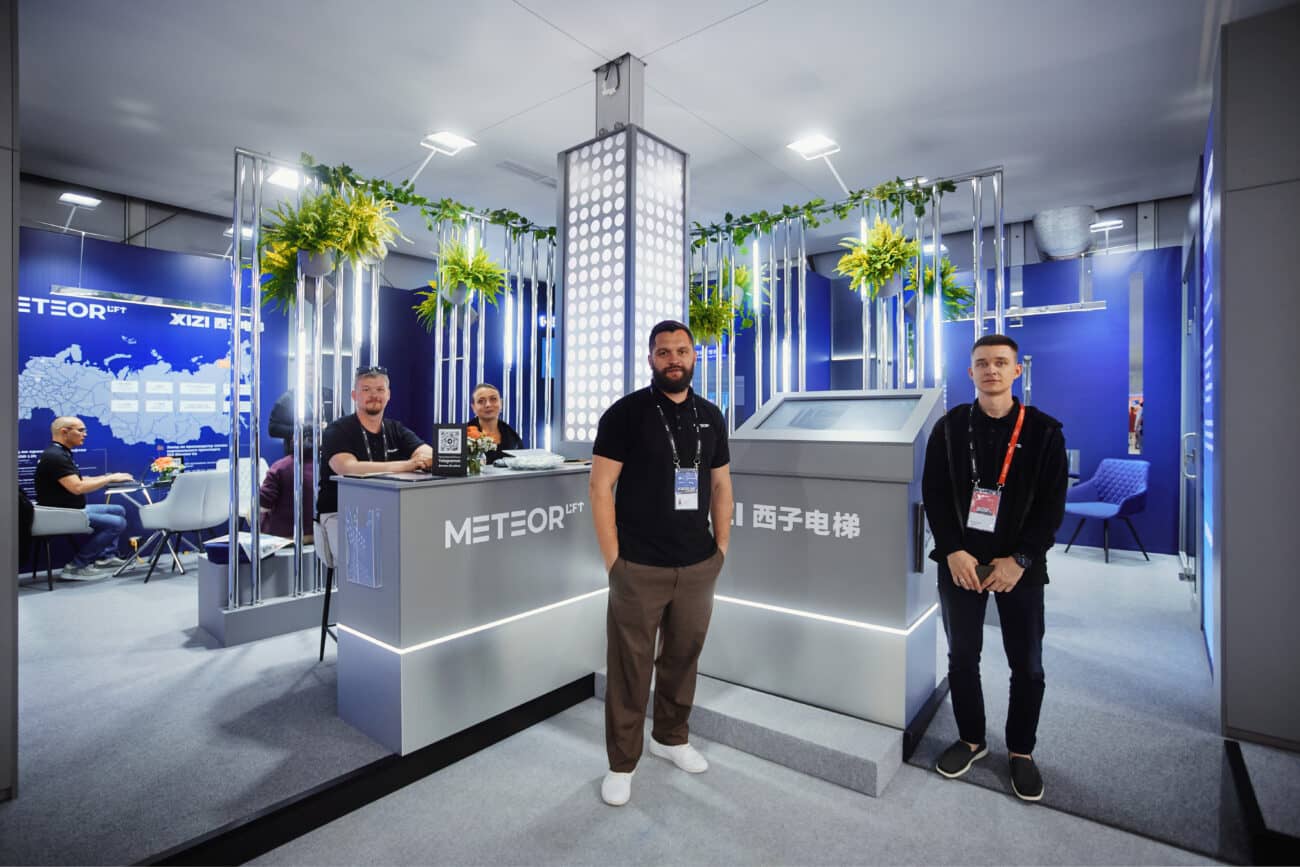
IT company booths serve two purposes: to showcase their technology and to generate short business contacts.
Key Solutions:
- Open floor plans without solid partitions;
- Built-in video panels and LED screens;
- Quick meeting areas (high tables, bar counters);
- Minimalist materials (glass, metal, matte plastic).
It is important to avoid heavy structures and dark colors, as they reduce the feeling of lightness and innovation.
Medicine and Pharmaceuticals
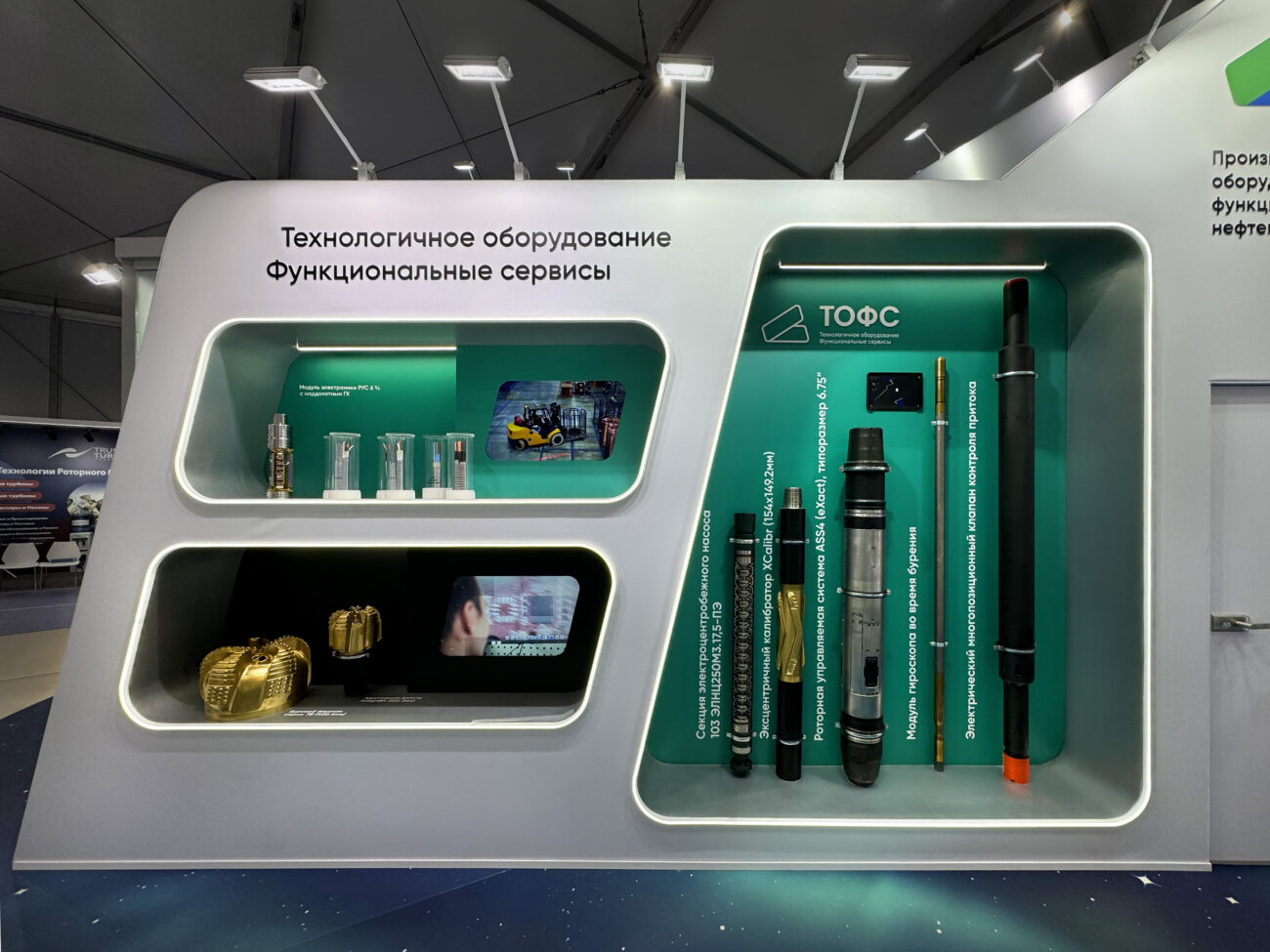
Trust and ergonomics are paramount in this industry. Visitors should feel calm and secure.
Standard requirements:
- Private meeting rooms for discussing clinical data;
- Soft, uniform, flicker-free lighting;
- High-quality washable flooring (high-pressure laminate, porcelain stoneware);
- Neutral color scheme (white, gray, shades of blue).
A critical mistake is using cheap or aggressive materials that are associated with unreliability.
Industry and Construction
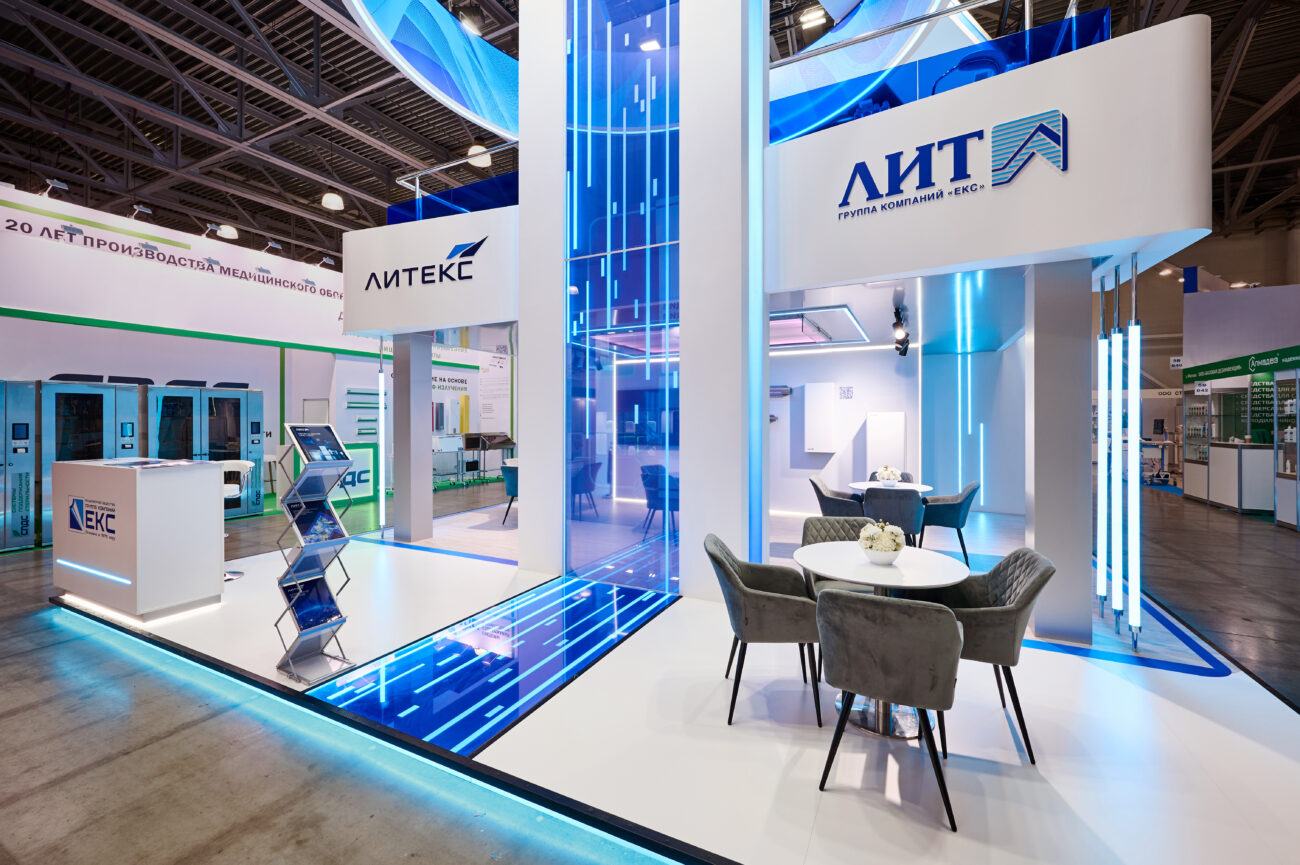
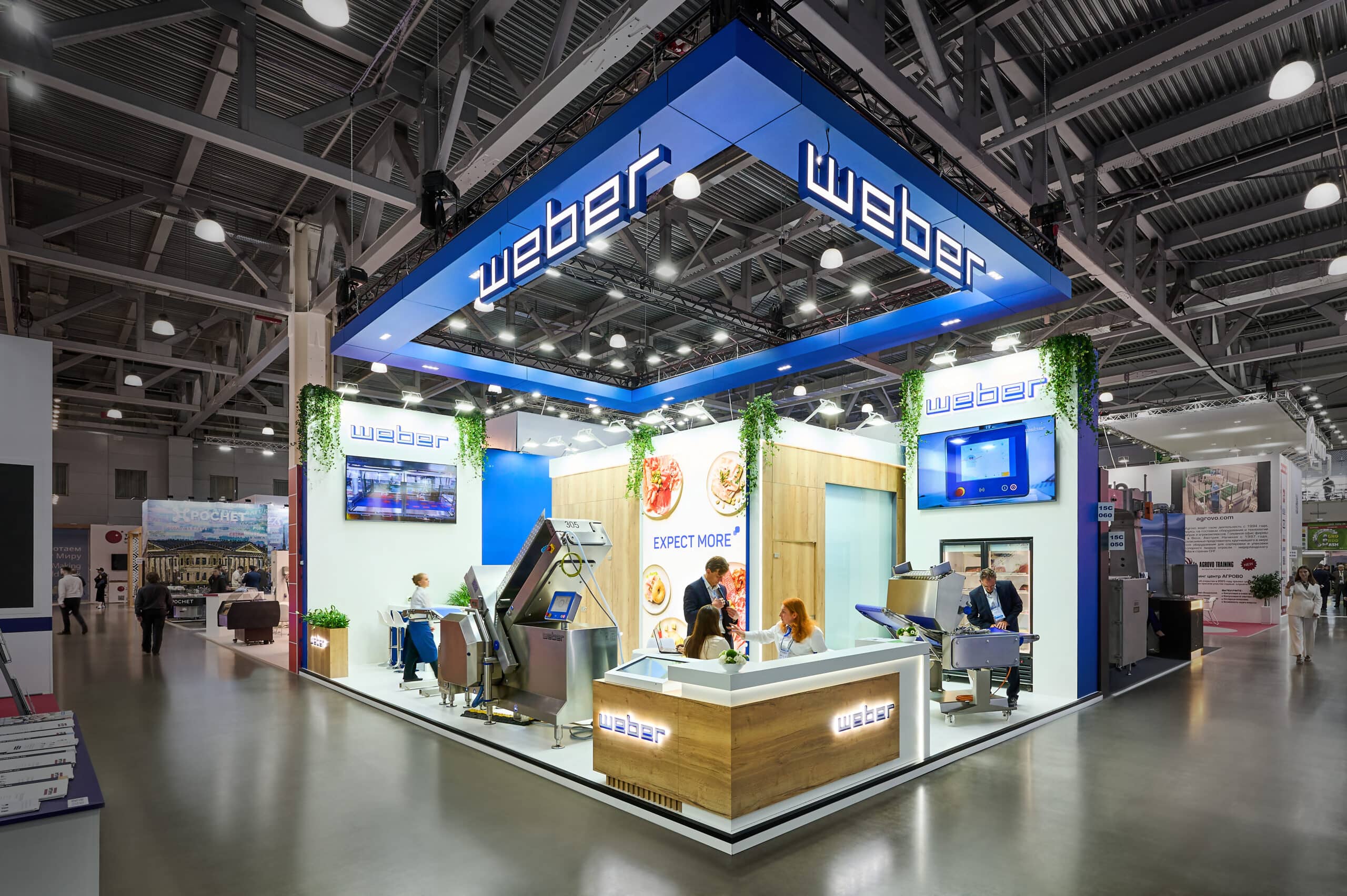
Here, the booth functions as a demonstration area for real product samples: machine tools, composite panels, fasteners, or fragments facades.
Design Guidelines:
- Reinforced floors and stable stands for heavy exhibits;
- Large information panels with dimensions and technical specifications;
- Discussion areas isolated from the noise of demonstration equipment;
- Industrial finishes (corrugated metal, raw concrete, premium plywood).
A common problem is insufficient light above the samples. Each product should be illuminated with directional spotlights.
FMCG (food, household chemicals, cosmetics)
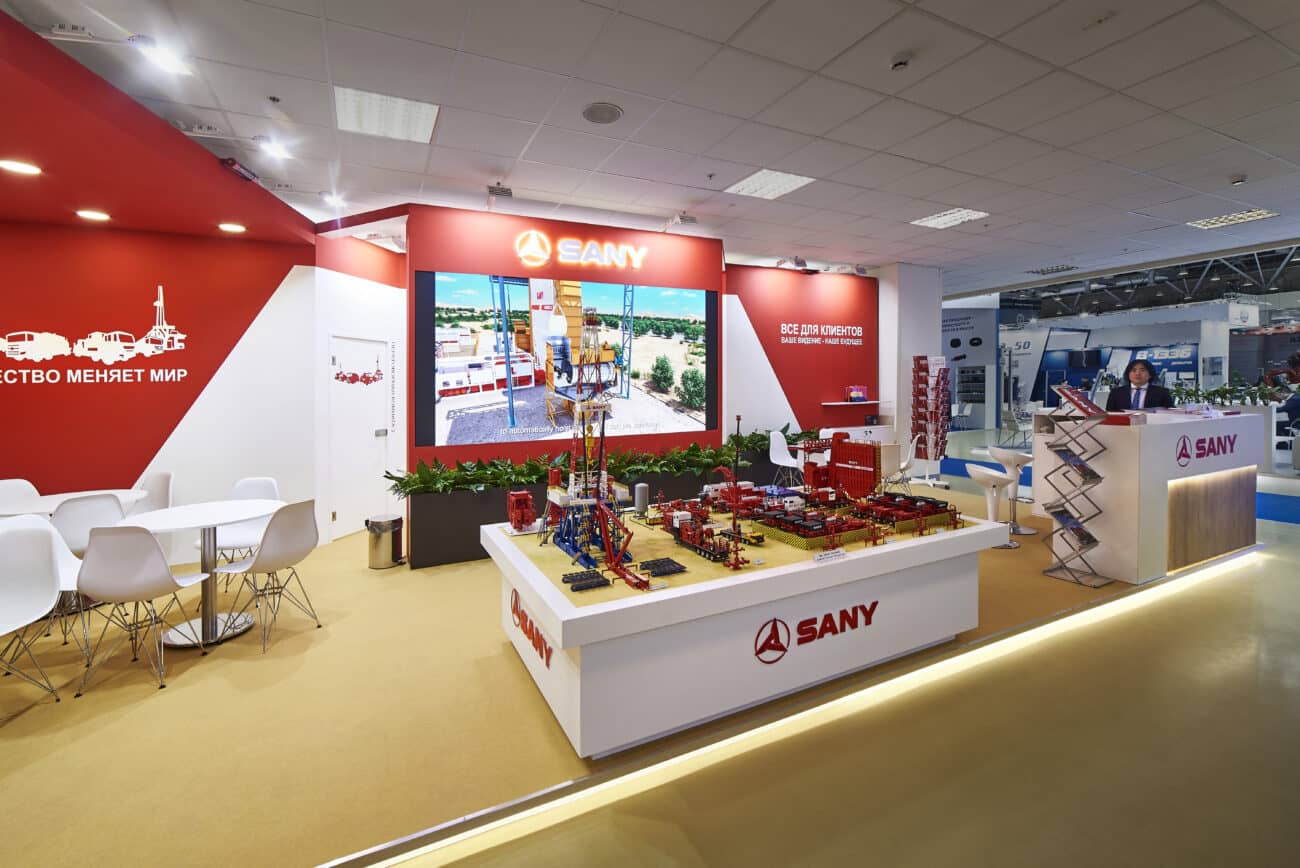
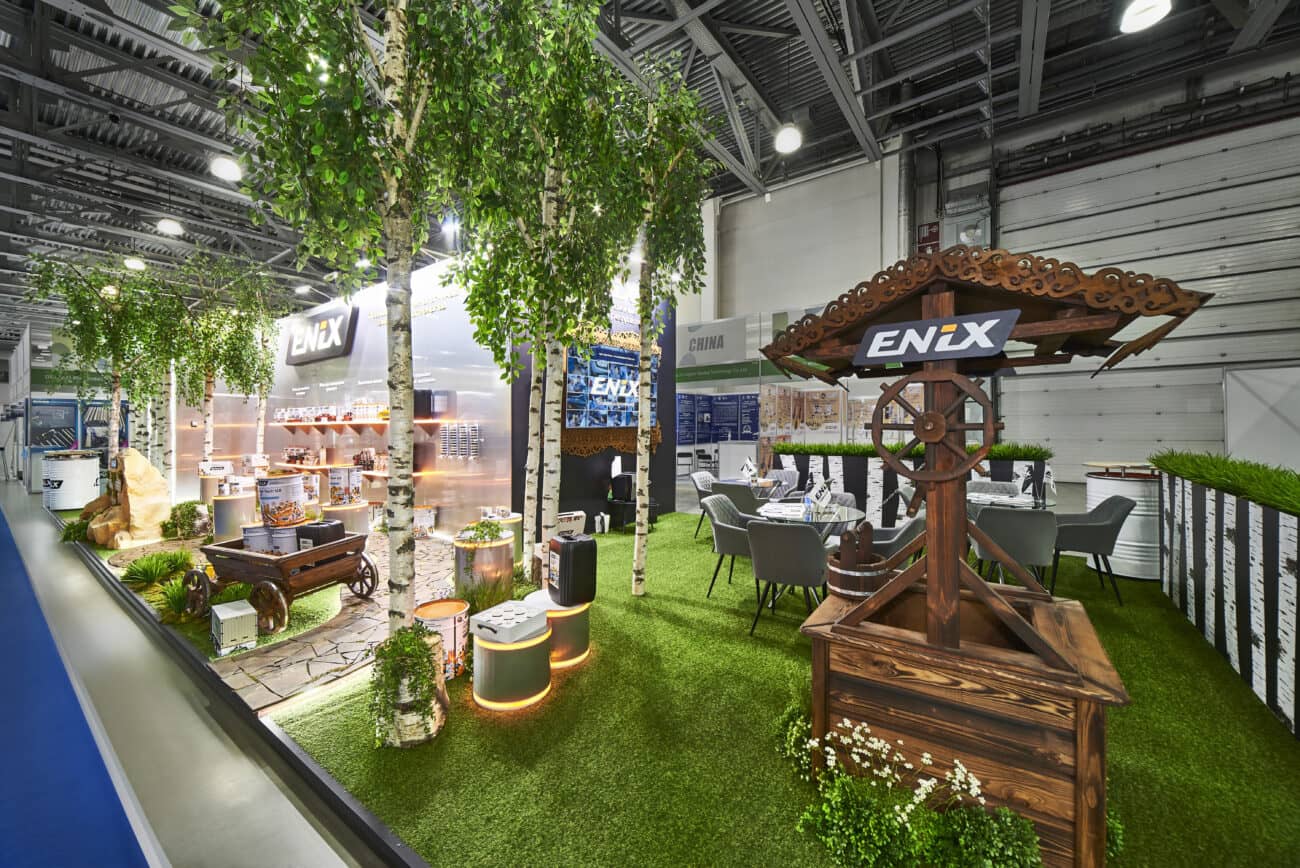
The main scenario is product testing and instant emotion. Design is driven by tactile contact.
What works:
- Open shelving with samples and samples;
- Accent colors (brand signature shades or contrasting solutions);
- vandal-resistant surfaces that can withstand frequent cleaning;
- step- and threshold-free navigation for sample carts.
A mistake is to put too much text on the stands. A visitor to an FMCG exhibition makes decisions in 5-10 seconds.
Industry Code: How to Get the Tone Right
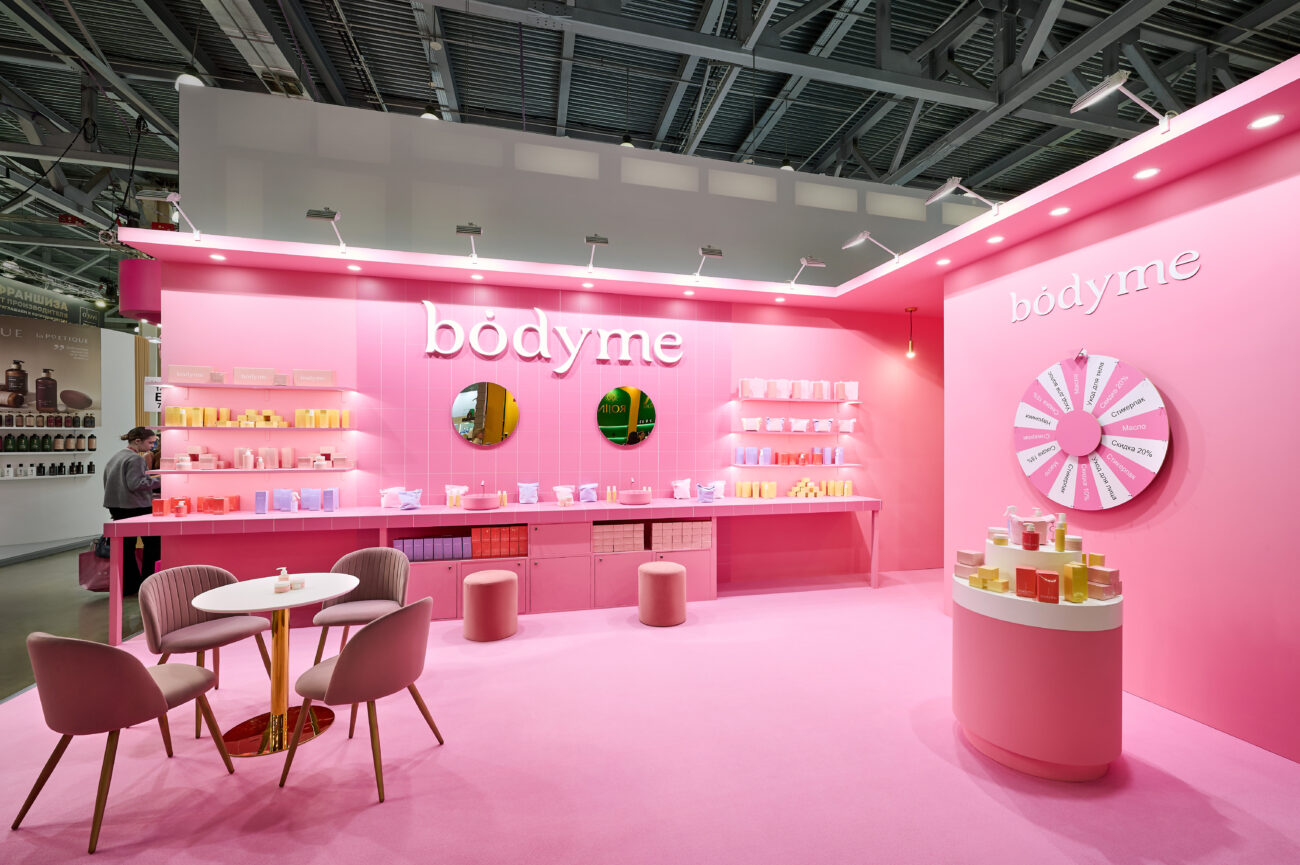
Each industry develops an unspoken design “code” that visitors grasp within seconds. An industrial equipment manufacturer expects a stand with honest heaviness and large forms. A medical company expects restrained solidity and purity. An IT brand expects lightness and visual dynamism. Violating this code disorients visitors: an overly bright pharmacist’s booth evokes mistrust, while a blank partition at an IT exhibit is perceived as closed-off and unwilling to communicate.
The designer’s job is not to create an original style from scratch, but to precisely meet industry expectations, but with high-quality execution. The best compliment a booth can receive at first glance is: “It’s immediately clear who you are and what you offer.” Therefore, before creating sketches, it’s worth studying a dozen leading exhibitors in your vertical—not to copy, but to identify visual constants. Only then should you add individual accents.
Exhibition booth design is an industry-specific tool. Choose materials and a layout that suits the exhibitor’s specific needs. You can get a design consultation at Insight Expo.
Learn more:

Why professional companies choose custom exhibition stands over standard solutions. Creative turnke...
Exhibition stand construction services in Moscow: from concept and 3D visualization to installation...
