



At 2026 exhibitions, overloaded visual noise has become ineffective. Visitors become tired of screens and banners even before entering the pavilion.Modern interaction is built not around sight, but around touch.Tactile experience becomes an anchor that compels visitors to stop and experience the brand without a single logo.
The correct selection of materials conveys company values and creates a physical connection with the audience.
Materials as carriers of meaning
Each material has its own associations. Choose textures that resonate with your brand’s DNA.
- Smooth, cool (glass, polished metal): technology, precision. For IT, electronics, and premium cars.
- Rough, matte (porous wood, concrete, rough fabric): naturalness, reliability. For eco-projects, construction, and handmade.
- Warm, soft (velour, leather, cork): comfort, care, trust. For wellness, children’s products, premium service.
- Heavy, monolithic (stone, rough metal): stability, solidity. For financial and industrial brands.
A single stand can combine different zones: a meeting room is soft and warm, a demo area is smooth and cool. This is how you manage perception.
Examples: When tactility replaces a logo
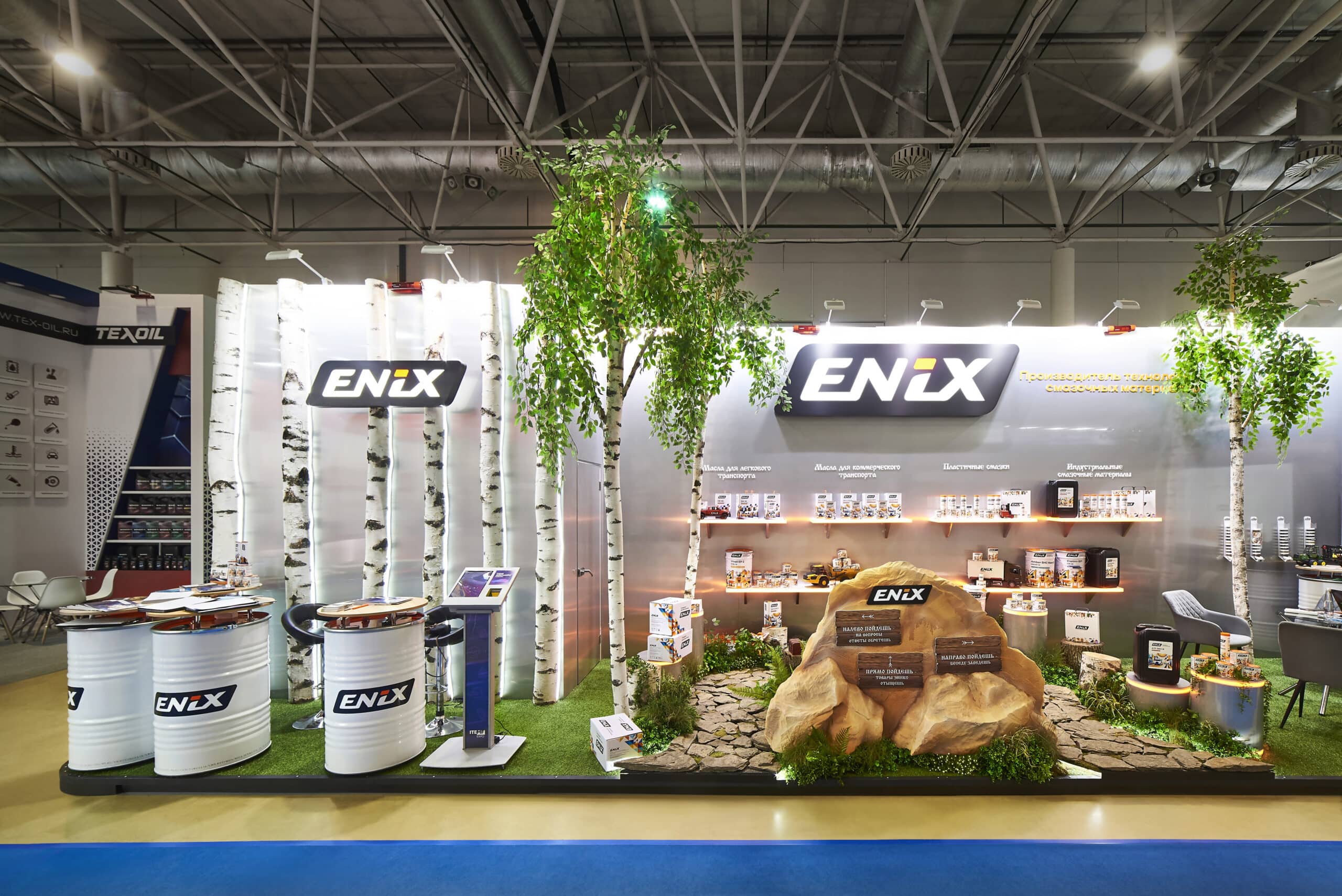
Example 1. A premium natural brand. Instead of a large logo on the façade, there’s a stand made of solid wood with an open grain, along with elements of untreated stone and thick linen. Visitors want to run their hands over it—and remember the brand as “the one where everything is real.”
Example 2. A technology company. Polished steel, perfectly smooth glass, hidden fasteners—everything creates a sense of impeccability. The values of reliability and precision are conveyed through physical contact.
Example 3. An eco-brand. A stand made of recycled plastic or kraft cardboard with an open grain, unpainted. Tactility proves technology without words.
Practical recommendations
- Divide spaces using textures. The meeting room uses soft textiles and acoustic panels. The demo area uses cool metal and glass. The lounge area uses wood and natural fabrics.
- Combine contrasts. Smooth concrete with rough wood, mirrored metal with velor – this attracts attention without being tiring.
- Control with the first touch. Make the first point of contact tactilely significant: a door handle made of raw metal, a reception desk with a distinctive texture.
- Light it correctly. Side lighting will emphasize relief, diffused lighting will soften it, and targeted lighting will create a play of shadows.
Tactility as an investment in memorability
In an age of visual noise, brands that focus on tactile experiences have an advantage. Physical interaction with a material activates deep layers of memory and evokes an emotional response.
Do you want your booth to be remembered not just by sight, but by experience? Start with your materials. They will say more about your brand than any slogan.
Learn more:
How does stand color influence visitors? This article explores the psychology of shades in exhibiti...
Innovative solutions, interactive experiences, VR/AR, and multimedia enhance brand presentation and...
